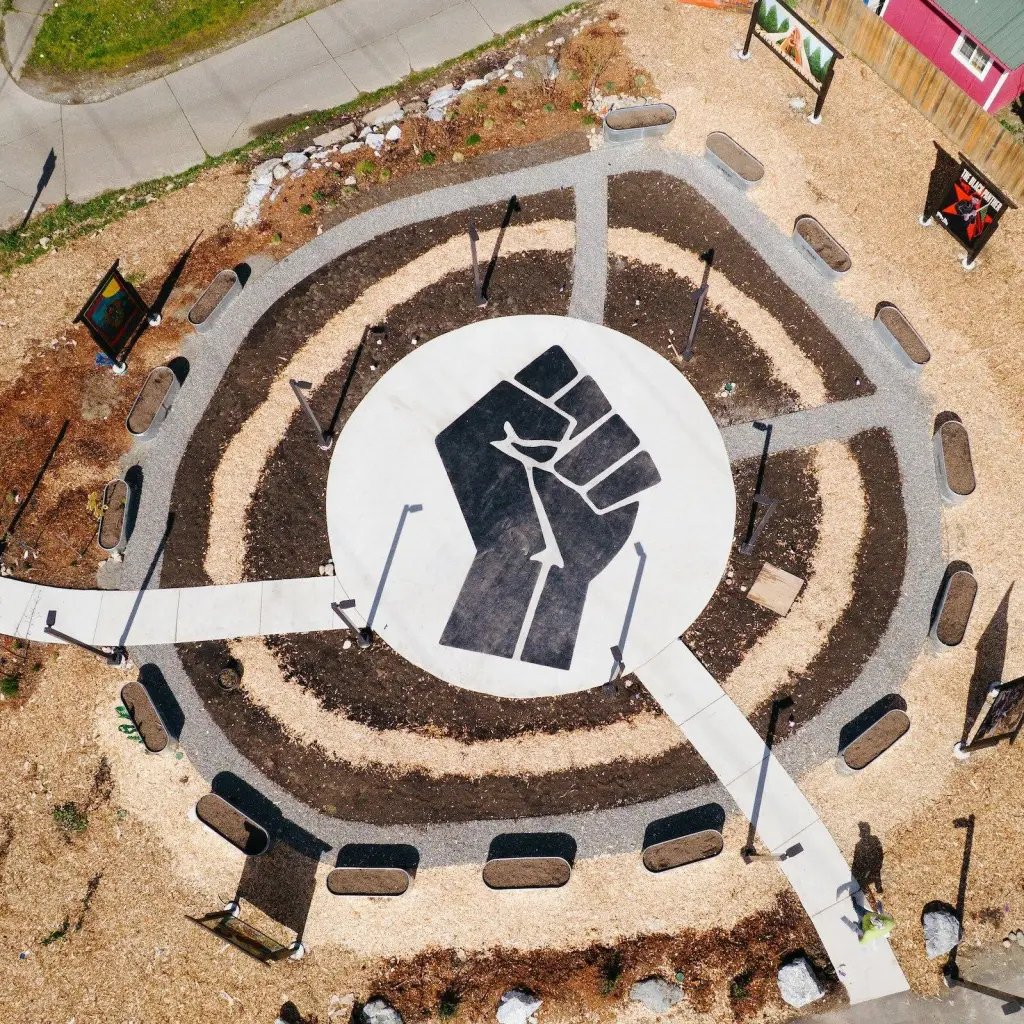
A Park Rooted in History and Purpose
A new chapter in Seattle-area history has officially taken shape with the opening of Black Panther Park in Skyway—a project nearly a decade in the making. More than just a park, this space stands as a living tribute to the legacy of the Black Panther Party and the profound impact its Seattle chapter had on the region.
Located at the intersection of Renton Avenue South and South 75th Avenue, the park represents both remembrance and renewal. It honors a movement rooted in social justice, while creating a space designed for today’s community to gather, grow, and thrive.
The Legacy of Seattle’s Black Panther Movement
The Seattle chapter of the Black Panther Party, founded in 1968, was one of the first chapters outside of California—and one of the most influential.
Locally, the Panthers were known not only for activism, but for action. They launched community programs that addressed real needs—like free breakfast programs for children and health clinics, including what is now the Carolyn Downs Family Medical Center.
These efforts weren’t charity—they were intentional systems of support aimed at empowering communities and addressing inequality at its roots. That same philosophy is embedded into the vision behind Black Panther Park today.
A Community Effort Nearly a Decade in the Making
Black Panther Park didn’t happen overnight. It took nine years of organizing, setbacks, and perseverance from community leaders, volunteers, and local organizations to bring the vision to life.
Led in part by urban farming advocate Nyema Clark and supported by local partners, the project became a symbol of what grassroots leadership can accomplish. Even through challenges like the pandemic, the community continued to push forward—hosting work parties, building gardens, and shaping the space together.
The result is something far more meaningful than a traditional park—it’s a shared achievement.
More Than a Park: A Living Community Space
What makes Black Panther Park unique is its purpose. It’s not just designed to be seen—it’s designed to be used.
At its core is a community garden, open to neighbors who can plant, harvest, and benefit from the space. This directly reflects the Panthers’ legacy of food justice and mutual aid.
The park also features public art, gathering areas, and cultural elements that celebrate Black history and identity. From murals to events, it creates a space where education, culture, and connection intersect.
Why Skyway Matters
The decision to build this park in Skyway is intentional. The area has one of the largest Black populations in Washington state, yet has historically been under-resourced and overlooked.
By placing Black Panther Park here, organizers are doing more than honoring history—they’re investing in a community that continues to shape the region’s cultural and social landscape.
A Symbol of What’s Possible
Black Panther Park stands as a reminder of what can happen when community vision meets persistence. It honors the past while actively shaping the future—creating a space rooted in culture, powered by people, and built with purpose.
For real estate professionals, community leaders, and residents alike, this project is a powerful example: neighborhoods aren’t just defined by homes—they’re defined by the spaces that bring people together.
Final Thoughts
Black Panther Park is more than a park—it’s a statement.
It tells the story of a movement that changed lives, a community that refused to be overlooked, and a future being built from the ground up—together.